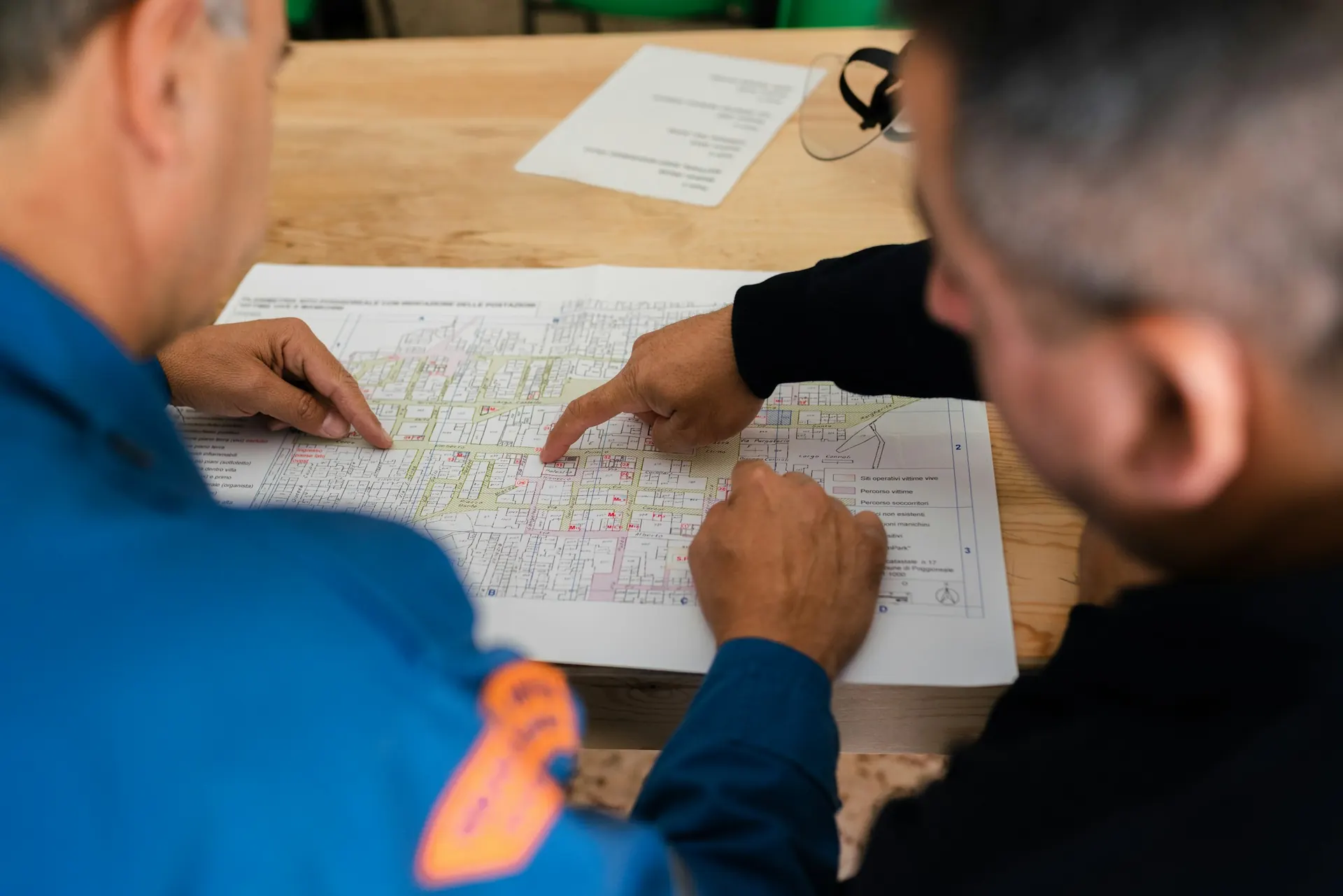
A construction budget starts by turning drawings into quantities. This is called quantity take-off. Combined with unit rates, it produces the bill of quantities (BOQ). The BOQ is the common language of the estimate, the bids and the interim payments.
Key terms
- Take-off: the quantity of a work item measured from the design, for example 240 m³ of C30 concrete, 18 tonnes of reinforcement, 1,450 m² of interior paint.
- Unit rate: the price of one unit of work. It covers materials, labour, equipment, wastage and overheads.
- Unit rate analysis: the open calculation of what a unit rate is made of.
- Bill of quantities (BOQ): the document listing every item’s description, unit, quantity, unit rate and amount.
- Estimate: the total of the BOQ; the contingency is shown separately.
How is a BOQ organised?
A good BOQ is written clearly enough that everyone reading it understands the same thing. It is usually divided into work groups:
| Work group | Example items | Typical unit |
|---|---|---|
| Preparation and earthworks | Excavation, fill, haulage | m³ |
| Reinforced concrete | Concrete, reinforcement, formwork | m³, t, m² |
| Walls and insulation | Masonry, thermal and waterproofing | m² |
| Finishing works | Plaster, screed, tiles, timber flooring, paint | m² |
| Joinery | Doors, windows, glazing | nr, m² |
| Mechanical services | Plumbing, heating, cooling | nr, m, item |
| Electrical services | Cabling, lighting, boards | nr, m |
| External works | Landscaping, boundary walls, paving | m², m |
Each item’s description should state the material quality and installation detail. A description such as ‘60×60 glazed porcelain tile, including adhesive and grout’ instead of ‘tiling’ removes the gap between bids.
How is the take-off done?
- Collect the full design set: architectural, structural, mechanical and electrical drawings, details and the specification.
- Build the item list: every piece of work in the design maps to an item; nothing is left under ‘other’.
- Measure the quantities: each item is measured in its own unit, from the drawings or on site if needed. The measurement rule (for example, whether openings are deducted) is written down.
- Check: totals are compared with independent figures such as floor area and volume; unusually low or high ratios are questioned.
- Add unit rates: analysed with their components and checked against current market conditions.
Common take-off mistakes
- Missing items: work shown in the design but left off the list comes back as a variation.
- Vague descriptions: the same item gets priced at different qualities.
- Mixed units: m instead of m², item instead of number.
- No measurement rule: the two parties measure the same work differently.
- Forgotten wastage and ancillary materials.
Why the BOQ matters
Beyond the budget, the BOQ does three jobs: it lets you compare bids on the same scope, it is the basis of interim payments, and it makes the cost of changes measurable. A well-prepared BOQ therefore prevents many disputes later in the project. We explain its role in cost control in how to control construction project costs.
DEMAFT’s approach
DEMAFT’s quotes are always itemised, with quantities and unit prices; ‘item-by-item quantities and reporting’ is part of how we work. Through our cost management and BOQ service we prepare BOQs, compare bids and check interim payments on behalf of owners and investors.
For those building a villa or detached house in Türkiye, DEMAFT’s villamaliyeti.com tool (in Turkish) works on the same logic: it takes off the quantities automatically from the plot, floors, rooms and quality level and gives the result as a cost range.